
Process family
LPC, vacuum carburizing, acetylene LPC, boost-diffusion cycles, low-pressure carbonitriding context and LPC + high-pressure gas quenching (HPGQ) equipment chains.
Vacuum thermochemical surface engineering for high-value gears, shafts, aerospace and drivetrain components.
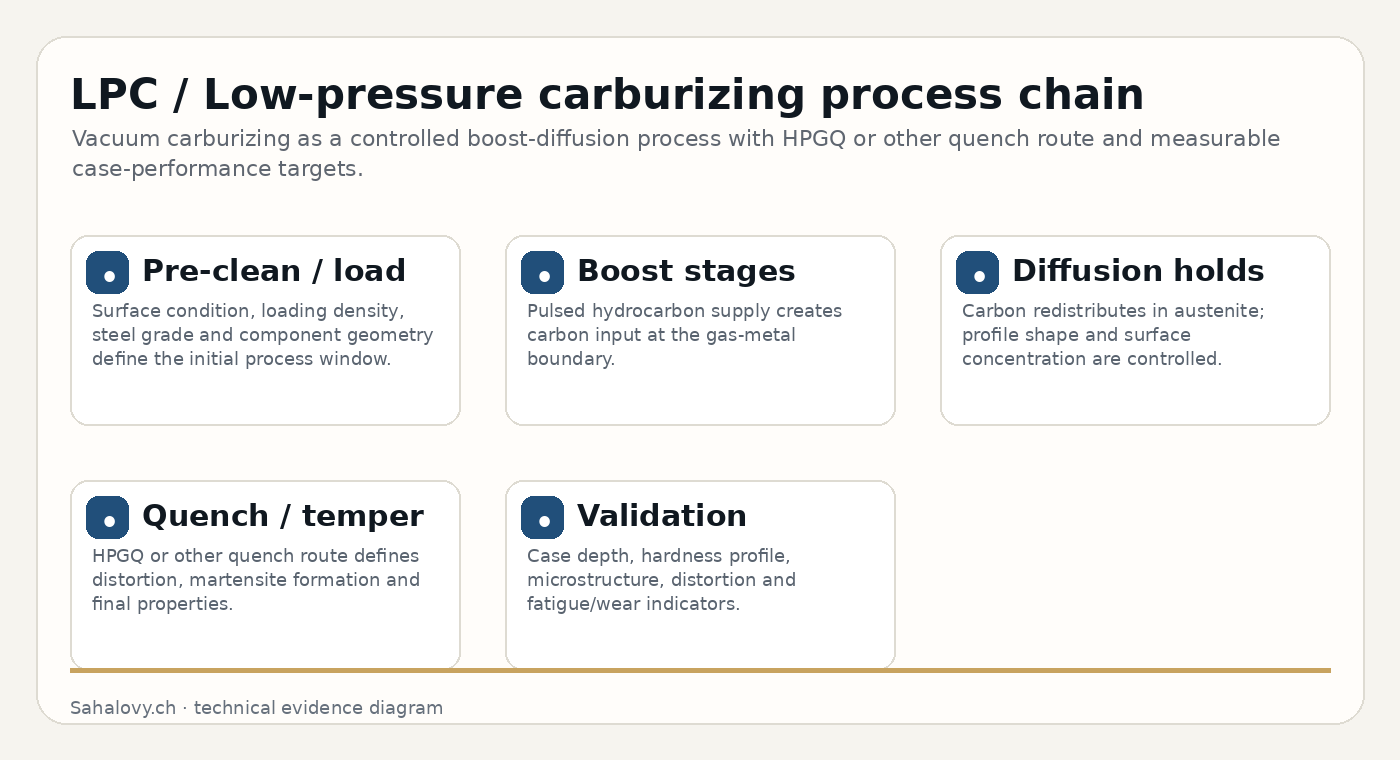
HPGQ means high-pressure gas quenching. In the LPC context it means that after low-pressure carburizing / vacuum carburizing the load is quenched by a high-pressure gas flow instead of conventional oil quenching.
Ukrainian wording: цементація при низькому тиску з подальшим високонапірним газовим гартуванням. Russian wording: цементация при низком давлении с последующей закалкой газом высокого давления.
The term is useful, but not always immediately recognizable outside vacuum heat-treatment circles, so it should be expanded on first use.
LPC / low-pressure carburizing is treated as a separate vacuum thermochemical technology, instead of a minor note inside generic heat treatment. It belongs in the same evidence system as plasma nitriding, duplex treatment and vacuum thermal processing.
LPC, vacuum carburizing, acetylene LPC, boost-diffusion cycles, low-pressure carbonitriding context and LPC + high-pressure gas quenching (HPGQ) equipment chains.
Hard case, wear and fatigue resistance, clean surface, lower oxidation, reduced distortion and controlled surface carbon / case-depth profile.
Automotive drivetrain, gears, shafts, synchronizers, railway and heavy transport transmissions, aerospace actuators, heat-treatment service centers and R&D pilot production.
| Topic | What should be specified |
|---|---|
| Furnace architecture | Single/multi-chamber LPC furnace, heating method, graphite/metal hot zone, load geometry, handling, HPGQ or oil-quench module. |
| Gas and cycle | Hydrocarbon gas, boost/diffusion sequence, pressure range, flow stability, gas distribution, recipe repeatability. |
| Quality control | Case depth, carbon profile, hardness profile, microstructure, retained austenite, distortion, surface cleanliness and test-coupon plan. |
| Materials | Case-hardening steels, high-alloy steels, component geometry, risk of carbide formation and quench sensitivity. |